Why Trezor Is Essential for Crypto Security
Cryptocurrency is revolutionizing finance, but security remains a top concern. Hackers, phishing scams, and malware threaten digital assets stored online. Trezor, a hardware wallet, offers a reliable solution by keeping your private keys offline, giving you full control over your funds.
This guide covers everything you need to know to get started on Trezor.io/start—from setup and securing your recovery seed to managing cryptocurrencies and using advanced features. By following this guide, you can confidently protect your crypto assets from threats.
1. Understanding Trezor Wallets
What Is a Trezor Wallet?
A Trezor wallet is a physical device that stores cryptocurrency private keys offline, protecting them from online attacks. Unlike software wallets, hardware wallets like Trezor ensure maximum security, even if your computer is compromised.
Trezor Models: One vs Model T
Trezor One: Ideal for beginners, supports hundreds of cryptocurrencies, and provides basic security features.
Trezor Model T: Advanced wallet with a touchscreen, wider coin support, and extra security layers.
Both models integrate with Trezor Suite, a platform for managing your digital assets safely.
2. Preparing to Set Up Your Trezor Wallet
What You’ll Need
Before beginning the setup process, ensure you have:
Your Trezor device
USB cable (included)
Computer or smartphone
Stable internet connection
Safety Precautions
Verify that your Trezor is purchased from an official source.
Check that the tamper-evident seal is intact.
Only use the official Trezor.io/start website to avoid phishing scams.
3. Step-by-Step Setup on Trezor.io/start
Step 1: Visit Trezor.io/start
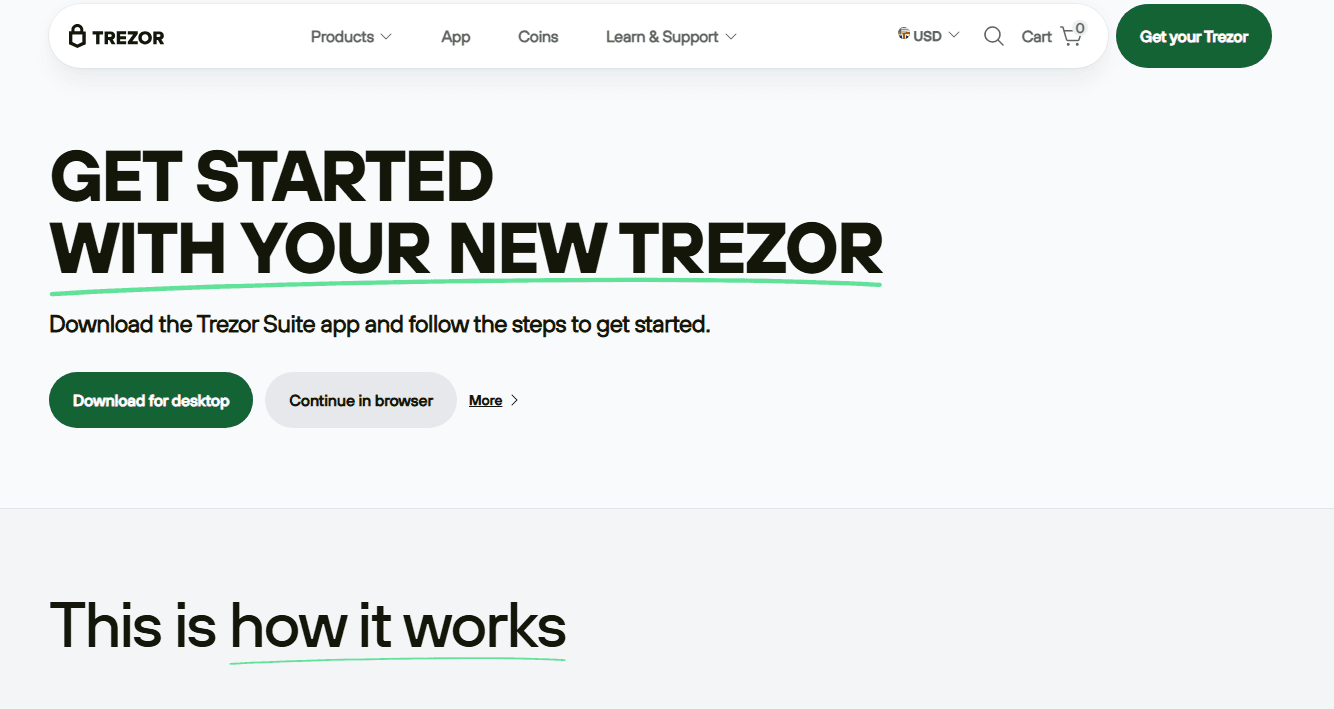
The official start page provides instructions, download links for Trezor Suite, and safety guidelines for a secure setup.
Step 2: Connect Your Device
Plug the Trezor device into your computer using the USB cable. Follow on-screen instructions to begin the setup process.
Step 3: Install Trezor Suite
Trezor Suite is the official app for managing your crypto. Available on desktop, mobile, and web, it allows you to:
View balances
Send and receive cryptocurrency
Manage multiple wallets securely
Step 4: Update Firmware
Firmware updates provide enhanced security and support for new cryptocurrencies. Always confirm updates directly on your device to prevent unauthorized firmware installations.
Step 5: Create a New Wallet
Generate a recovery seed: A 12- or 24-word phrase used to restore your wallet if lost.
Write it down securely: Never store it digitally.
Confirm your recovery phrase: Follow on-screen instructions to verify accuracy.
Step 6: Set a PIN Code
A strong PIN protects your device from unauthorized access. Trezor implements exponential delays after incorrect attempts to prevent brute-force attacks.
4. Securing Your Trezor Wallet
Recovery Seed Security
Your recovery seed is the master key to your wallet. Store it in a fireproof and waterproof location. Never share it online or with anyone.
Common Security Mistakes to Avoid
Avoid storing your seed digitally.
Never enter your seed on websites or apps.
Do not share your seed with anyone, even trusted contacts.
5. Managing Your Cryptocurrencies
Receiving and Sending Coins
Trezor supports hundreds of cryptocurrencies, including Bitcoin, Ethereum, and many altcoins. Receive crypto safely by sharing your wallet’s public address.
Using Trezor Suite
View balances and transaction history
Send and receive crypto securely
Integrate with third-party wallets for DeFi, staking, or advanced management
6. Advanced Security Features
Passphrase Protection
Add a passphrase to your recovery seed for an extra layer of security. Even if someone gets your seed, they cannot access your funds without the passphrase.
Multisignature Accounts
Trezor supports multisig setups, requiring multiple approvals for transactions. Perfect for shared wallets or businesses.
DeFi and Staking Integration
Connect Trezor to supported decentralized applications to stake coins, lend assets, or interact with smart contracts securely.
7. Troubleshooting and Support
Common Issues
Device not recognized: Try a different USB port or cable.
Firmware update errors: Restart the device and update via Trezor Suite.
Getting Help
Visit the Trezor Support Center for guides, FAQs, and troubleshooting tips.
Join community forums to get advice and insights from experienced users.
8. Best Practices for Long-Term Security
Regularly update firmware.
Verify all transactions directly on your device.
Avoid public Wi-Fi for wallet management.
Periodically check that your recovery seed is stored safely.
Conclusion: Start Your Crypto Journey Safely
Trezor provides a secure, user-friendly solution for managing cryptocurrency. By following this guide on Trezor.io/start, you can set up your wallet, protect your recovery seed, and confidently manage your digital assets.
Hardware wallets like Trezor give you full control over your funds, protect against online threats, and ensure peace of mind. Start today and make security your top priority from the very first step.